

TA Cloning Kit (JSR-E-403)
Product Name | Item number | Packaging Specifications | Price |
TA Cloning Kit | JSR-E-403-A | box | Inquiry for a quote |
TA Cloning Kit | JSR-E-403-B | box | Inquiry for a quote |
Keywords
Category
Product Description
FAQ
Product Information
Related Documents
Jianshi Bio TA Cloning Kit (JSR-E-403 Series)
Product Overview
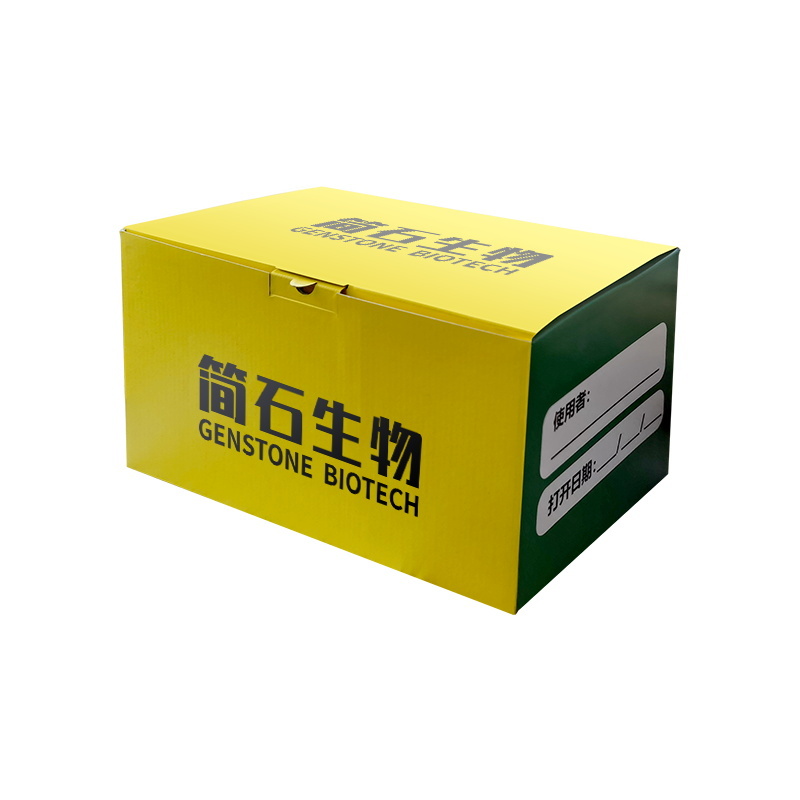
This product is a TA cloning kit (catalog numbers JSR‑E‑403‑A and JSR‑E‑403‑B), comprising the pMD19‑T vector and a highly active T4 DNA ligase, specifically designed for TA‑cloning of PCR products. The vector is derived from pUC19 and is optimized to accommodate the 3′‑A‑tailing characteristic of Taq‑PCR products, delivering excellent cloning efficiency. The included T4 DNA ligase can ligate both sticky‑ended and blunt‑ended DNA and repair single‑strand nicks in nucleic acids. The kit features high β‑galactosidase activity, resulting in faster and darker blue‑white colony formation for intuitive positive clone screening. A built-in 500 bp control insert allows for positive‑control setup, and the protocol supports either overnight ligation at 16°C or rapid short‑time ligation; it is compatible with all competent cells that accept pUC19. All components should be stored at −20°C. Each kit undergoes rigorous quality testing prior to shipment and is backed by a one‑year warranty from the date of purchase. For research use only (RUO).
Product Features
- High‑activity T4 DNA ligase, compatible with both sticky‑ended and blunt‑ended DNA ligation, capable of repairing single‑strand nicks in DNA, and suitable for TA cloning of various PCR products.
- pMD19‑T is a TA‑cloning vector specifically designed for use with the pUC19 backbone, precisely accommodating the 3′‑A‑tailing characteristic of PCR products and significantly increasing the cloning efficiency.
- The blue-white colony screening system has been optimized, resulting in higher β-galactosidase activity, faster color development, deeper blue colonies, and rapid visual identification of positive clones.
- A 500 bp control insert is included as a reference fragment, enabling the construction of a positive control reaction to quickly verify whether the ligation system is functioning properly.
- A dual-mode flexible connectivity solution that delivers peak connection efficiency during 16°C overnight incubation while also enabling rapid, short‑duration connections, thus accommodating diverse experimental timelines.
- Broad-spectrum competent cells; all competent cells suitable for the pUC19 vector can be used with this kit.
- A standardized 20 μL reaction system is provided, with clearly defined component ratios, allowing beginners to prepare the reaction mixture directly according to the specified protocol.
- A complete, end-to-end experimental protocol covering all steps—ligation, heat-shock transformation, bacterial culture, and blue-white colony screening—with a low barrier to entry.
- Optimization tips for the accompanying specialized experiments: it is recommended to purify PCR products by gel extraction to remove impurities, and to establish appropriate ligation temperatures and enzyme inactivation conditions to prevent a decline in cloning efficiency.
- All components are stably stored at −20°C; each batch undergoes comprehensive quality inspection prior to shipment, ensuring consistent and reliable reagent performance, with a one-year warranty provided after sale.
Technical Specifications for the TA Cloning Kit (All Formats)
| Specification Category | Item number | Product Name | Storage conditions |
|---|---|---|---|
| TA Cloning Kit, Specification A | JSR-E-403-A | TA Cloning Kit, including pMD19‑T vector, T4 DNA ligase, and a complete set of control insert fragments. | Store at -20°C, protected from light, and in a sealed container. |
| TA Cloning Kit, Specification B | JSR-E-403-B | TA Cloning Kit, including pMD19‑T vector, T4 DNA ligase, and a complete set of control insert fragments. | Store at -20°C, protected from light, and in a sealed container. |
Jianshi Bio JSR-E-403 TA Cloning Kit – Full Product Line
pMD19-T Vector PCR Product High-Efficiency TA Cloning Kit – Frequently Asked Questions Manual
Core Product Advantages
- High-activity T4 DNA ligase : Compatible with sticky/ blunt ends, repairs single-strand nuclease-induced nicks
- pMD19-T vector : Modified pUC19, compatible with A‑tailing of PCR products at the 3′ end for cloning
- Blue-white colony optimization : High β-galactosidase activity, resulting in faster and darker color development.
- Positive control included : Includes a 500-bp control insert for verifying the ligation reaction.
Item Number and Basic System Parameters
- Product item number : Two specifications, JSR-E-403-A and JSR-E-403-B
- Carrier concentration :pMD19-T Vector 50 ng/μL
- Ligase Specification : T4 DNA Ligase 10 U/μl
- Standard reaction : 20 μL reaction system, insert-to-vector molar ratio of 3:1 to 5:1
Reaction and Storage Operating Procedures
- Suitable connection temperature : ≤25℃; operation above 26℃ is prohibited.
- Two incubation protocols : 16°C overnight for 16 hours / 16°C rapid connection for 30 minutes
- Enzyme inactivation method : 65℃ for 10 min or 70℃ for 5 min
- Applicable Scenarios : TA cloning of conventional PCR products, construction of gene expression vectors
JSR-E-403 TA Cloning Kit – High-Frequency FAQs
The kit is available in two standardized catalog numbers, with a vector backbone derived from the well-established pUC19 plasmid, specifically optimized for TA‑cloning of PCR products.
1. Product model numbers: JSR-E-403-A, JSR-E-403-B;
2. Vector source: The pMD19‑T vector is derived from the pUC19 vector and leverages the inherent 3′‑terminal A‑tailing activity of PCR products catalyzed by standard Taq polymerase to enhance ligation efficiency.
3. The vector retains all the basic functions of pUC19 and is compatible with standard ampicillin‑resistance selection systems.
1. The inserted fragment was fixed at a length of 500 bp, with a concentration of 50 ng/μL.
2. A positive control ligation tube can be prepared separately to verify the activity of the kit’s T4 DNA ligase and the integrity of the buffer system.
3. When no white colonies are observed during cloning, a positive control can be used to quickly determine whether the reagents have failed or if the issue lies with the sample or the experimental procedure.
The highly active T4 DNA ligase meets all the requirements of conventional cloning; it not only ligates DNA but also repairs complex interstrand nicks in single-stranded DNA.
1. Compatible ends: sticky-ended DNA, blunt-ended DNA;
2. Repair function: repairs single-strand nicks in double-stranded DNA, RNA strands, and DNA/RNA hybrid duplexes;
3. Scope of compatibility: standard TA cloning, vector restriction‑enzyme digestion and ligation, and fragment nick‑repair assays.
1. Core optimization: The expression activity of the carrier β-galactosidase has been significantly enhanced.
2. Screening advantages: Blue-white colony screening is faster, with deeper blue colonies and higher contrast for identifying white positive clones.
3. Experimental convenience: No lengthy color development is required, and when picking single colonies, empty‑vector blue plaques can be rapidly distinguished from recombinant white plaques.
The formation of circular recombinant DNA is temperature-sensitive; high temperatures directly inhibit the ligation reaction, thereby reducing the yield of positive clones.
1. Recommended reaction temperature: Maintain the entire process at or below 25°C.
2. Adverse effects of high temperature: When the ambient temperature exceeds 26°C, it becomes difficult to generate circular recombinant plasmids, and ligation efficiency declines significantly.
3. Optimization strategy: When the room temperature is relatively high, the incubation time of the binding step can be appropriately extended to compensate for the loss in efficiency.
1. Recommended molar ratio: insert fragment : pMD19‑T vector = 3 : 1 ~ 5 : 1;
2. The total reaction volume is fixed at 20 μL, with the remaining volume made up with water.
3. Vector dosage range: Add 20–100 ng of pMD19‑T vector to standard tubes; for the positive control, add a fixed volume of 1 μL of the vector stock solution.
Either of the two inactivation protocols can completely inactivate the ligase, thereby preventing residual enzymatic activity from interfering with transformation:
1. Protocol 1: Heat in a 65°C water bath for 10 min;
2. Scheme 2: Heat in a 70°C water bath for 5 min;
Unpurified PCR products contain a variety of interfering impurities, which can significantly reduce the positive cloning rate.
1. Impurity types: non-specific short DNA fragments that cannot be resolved by electrophoresis, residual PCR primers, and dNTP by-products;
2. Mechanism of interference: Non-specific fragments and primers competitively bind to the vector’s binding sites, thereby occupying the available ligation sites.
3. Optimization strategy: Excise and recover the target band, remove all impurities, and significantly increase the number of white, positive colonies.
The vector backbone is derived from the pUC19 plasmid, compatible with most commercially available standard competent cells for cloning, and does not require the use of specialized cells.
1. Compatibility: This product is compatible with all competent cells suitable for pUC19 plasmid transformation.
2. There is no need to purchase specialized, strain‑specific competent cells; the laboratory’s existing universal cloning cells can be used directly.
3. All plates are screened using LB agar medium supplemented with Amp, IPTG, and X-Gal.
The two incubation protocols are tailored to meet different experimental time‑scale requirements, and the complete transformation workflow encompasses all steps, including heat‑shock recovery and plating for selection.
I. Two ligation‑incubation protocols: 1. Incubation at 16°C for 16 hours overnight: yields the highest ligation efficiency and is the preferred method for routine cloning; 2. Incubation at 16°C for 30 minutes: offers rapid, time‑saving processing, but with a slight reduction in ligation efficiency.
II. Key Steps for Complete Transformation and Screening: 1. Add 10 μL of ligation product to 100 μL of competent cells, and incubate on ice for 30 min; 2. Subject the mixture to a 90‑second heat shock in a 42°C water bath, then immediately transfer it back to ice for 5 min; 3. Add 890 μL of LB liquid medium and shake at 37°C for 60 min to recover the cells; 4. Plate the transformed cells onto agar plates containing Amp, IPTG, and X‑Gal, and incubate at 37°C until single colonies form; select white, positive clones; 5. Pick colonies with white plaques and verify the size of the inserted fragment by PCR.
Related Products


Order Consultation: Hu Manager

Order Consultation: An Manager

End-user Scientific Research Customer Order Consultation

Technical Consultation: Bai Technical

Customer Service

Douyin

WeChat Video Account

Kuaishou

Contact Us
Jianshi Biotechnology (Beijing) Co., Ltd.
Company Address: Room 401, Building 11, No. 12 Courtyard, Juyuan Middle Road, Mapo Town, Shunyi District, Beijing
Phone: 86 18640171737
E-mail: gwang@jianshibio.com
Jianshi Biotechnology (Zhejiang) Co., Ltd.
Address: Building 11, No. 36 Xingshun Road, Zhongyi Ningbo Eco-park, Yuyao City, Zhejiang Province
WhatsApp: 86 18640171737
Leave a Message
If you are interested in our products, please leave your phone number.
Consult Now →Product Subscription
Subscribe to us to stay informed about product updates and special offers