

Blog
2024 Nobel Prize in Physiology or Medicine - microRNA: Unveiling the Mysteries of Gene Regulation
Published Time:
2024-10-21
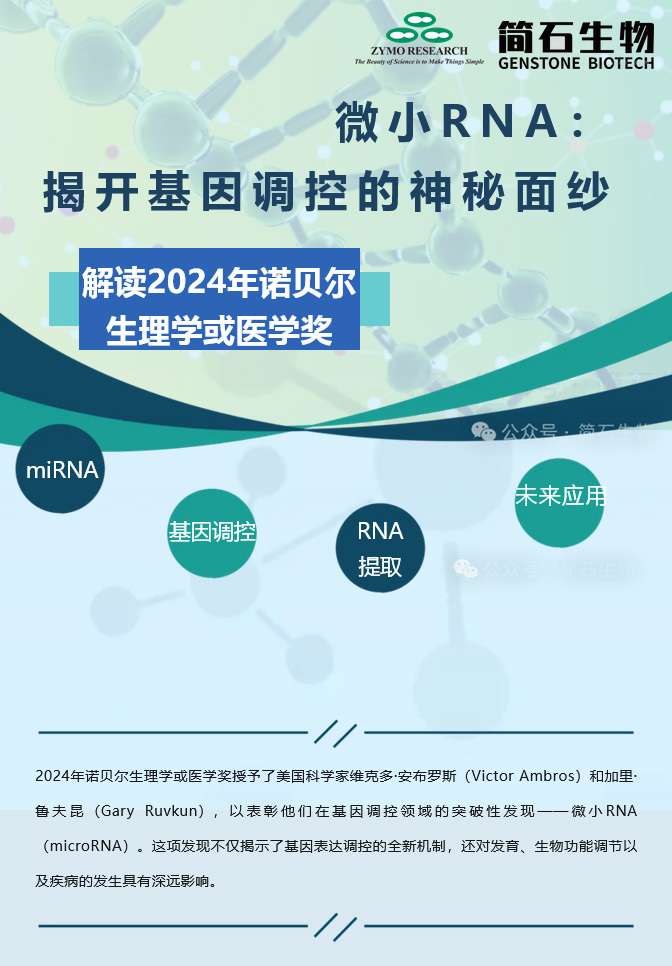
The 2024 Nobel Prize in Physiology or Medicine was awarded to American scientists Victor Ambros and Gary Ruvkun for their groundbreaking discovery in gene regulation – microRNA (miRNA). This discovery not only revealed a novel mechanism of gene expression regulation, but also has a profound impact on development, biological function regulation, and disease pathogenesis.
Preliminary Exploration of Gene Regulation (1980s)
The story of microRNA began in the 1980s, when scientists became interested in gene regulation, particularly why the same genes exhibit different characteristics in different cell types. Ambros and Ruvkun's research focused primarily on the model organism Caenorhabditis elegans ( *C. elegans*). They were studying two genes, *lin-4* and *lin-14*, to understand their roles in the nematode's developmental process. Mutations in these two genes caused disruptions in the timing of development, indicating their important roles in regulating developmental timing. Through this research, scientists began to realize that there might be an undiscovered mechanism in gene regulation【11†source】.
The Discovery of microRNA (1990s)
In 1993, Ambros's team discovered the first microRNA, *lin-4*. Unlike traditional genes that encode proteins, it produced a very short RNA molecule that could bind to the mRNA of another gene, *lin-14*, thereby preventing the production of *lin-14* protein. This discovery revealed that RNA is not merely an intermediate product of protein synthesis but can also directly participate in gene regulation. Almost simultaneously, Ruvkun's research found that *lin-4* prevents the translation of *lin-14* mRNA through binding. These two studies revealed a new level of gene regulation—RNA can regulate gene expression by preventing the translation of mRNA【11†source】【12†source】.
Widespread Application and Clinical Exploration of microRNA (2000s and Beyond)
Over time, scientists began to realize that microRNAs exist not only in nematodes but also play important roles in various organisms, including humans. In 2000, Ruvkun's laboratory discovered another microRNA, *let-7*, indicating that microRNAs are highly conserved evolutionarily, with similar gene regulation mechanisms from nematodes to humans. Since then, researchers have discovered thousands of microRNA molecules, covering a wide range of fields from developmental regulation to disease pathogenesis. In recent years, microRNAs have played a key role in the study of various diseases such as cancer and cardiovascular diseases, and have also provided possibilities for developing new biomarkers and therapeutic methods【12†source】.
After Ambros's team discovered microRNA (*lin-4*) in 1993, the study of gene regulation entered a new dimension. Previous gene regulation research mainly focused on the regulatory pathways of protein synthesis, while the discovery of microRNA revealed that RNA itself can directly regulate gene expression, especially by preventing the translation of messenger RNA (mRNA). This showed scientists that the complexity of gene regulation far exceeded previous understanding, opening up a new role for RNA in regulatory functions. Here are some key points of this new dimension of gene regulation:
1. The Key Role of Non-coding RNA
MicroRNAs are a type of non-coding RNA. They do not participate in protein coding but regulate gene expression by binding to target mRNA. This mechanism shows that not only genes encoding proteins are important to organisms, but non-coding RNAs also play a crucial role in gene regulation. Many microRNAs function by binding and inhibiting the translation of specific mRNAs, preventing them from synthesizing proteins. This level of regulation gives organisms greater flexibility and precision in gene expression.
2. Broad Biological Functions
With the discovery of microRNAs, scientists gradually realized that they play key roles in various biological processes. MicroRNAs not only affect developmental processes but also participate in various physiological functions such as cell division, cell differentiation, metabolic regulation, immune responses, and apoptosis. For example, *let-7*, another early-discovered microRNA, has been shown to be highly conserved in various organisms from nematodes to humans and is closely related to developmental timing. The discovery of *let-7* further supports the view that microRNAs are highly conserved in evolution【12†source】.
3. Regulatory Roles in Diseases
Since the discovery of microRNAs, their association with various diseases has gradually been revealed, especially their role in cancer. Dysregulation of microRNA expression can lead to the occurrence and development of cancer. They can promote tumor growth by inhibiting tumor suppressor genes or activating oncogenes. For example, in certain types of cancer, abnormal expression of specific microRNAs has been shown to directly affect the regulatory pathways of cell proliferation and differentiation. Therefore, microRNAs have become potential cancer diagnostic markers and therapeutic targets【11†source】.
Cardiovascular disease is also an important area for studying microRNAs. In patients with type 2 diabetes and heart disease, the levels of certain microRNAs are closely related to the occurrence of vascular complications. For example, studies have shown that the expression level of microRNA-210 is abnormal in these patients, leading to vascular damage. By regulating the levels of these microRNAs, it may be possible to develop new treatments to prevent or treat cardiovascular diseases【12†source】.
4. The Multi-layered Complexity of Gene Regulation
The discovery of microRNAs has demonstrated the multi-layered structure of gene regulation. Traditional gene regulation usually only involves the transcription of DNA to mRNA and the translation of mRNA to protein. MicroRNAs introduce a new regulatory mechanism that can precisely control protein synthesis by binding to mRNA. This mechanism greatly enriches the regulatory network of gene expression and increases the cell's ability to dynamically regulate according to environmental changes. This multi-layered regulation provides organisms with a more flexible adaptation mechanism to cope with external and internal changes【11†source】.
5. Broad Prospects for Clinical Applications
The potential of microRNAs in medicine is also gradually emerging. Due to their specificity and relatively small size, microRNAs are expected to become important tools in precision medicine. Scientists are studying how to use microRNAs as biomarkers for diseases for early diagnosis, disease monitoring, and evaluation of treatment effects. For example, specific microRNAs in certain types of cancer can be identified through blood tests, helping doctors diagnose cancer earlier and develop personalized treatment plans. At the same time, microRNA-based drugs are being developed, especially in the treatment of cardiovascular diseases and neurodegenerative diseases【12†source】.
1. Biomarkers in Disease Diagnosis
The stability and widespread distribution of microRNA in bodily fluids such as blood and urine make it an ideal disease biomarker. Studies have shown that specific diseases (such as cancer, cardiovascular disease, neurodegenerative diseases, etc.) are often accompanied by specific changes in microRNA expression profiles. By detecting the levels of these microRNAs in the blood, early diagnosis or monitoring of disease progression can be achieved. For example, cancer types such as lung cancer, breast cancer, and prostate cancer are all associated with the abnormal expression of certain microRNAs, and microRNAs can be used as non-invasive diagnostic tools for early cancer screening. Karolinska Institutet )。
Furthermore, in cardiovascular disease, researchers have found that certain microRNAs can reflect the damage status of cardiomyocytes and can therefore be used to predict the risk of heart disease. As microRNA diagnostic tools continue to develop, they have the potential to replace traditional biomarkers in future clinical diagnosis, providing higher sensitivity and specificity.
2. Therapeutic Applications of MicroRNA
The therapeutic potential of microRNA is mainly concentrated in two aspects: inhibiting abnormally expressed microRNAs (microRNA inhibitors) and supplementing missing microRNAs (microRNA mimics). These two methods can target dysregulated microRNAs in diseases, restore the balance of gene expression, and thereby treat diseases. For example, in cancer, if a certain microRNA inhibits tumor suppressor genes, the function of this microRNA can be blocked by microRNA inhibitors to inhibit tumor development.
On the other hand, if the absence of a certain microRNA leads to disease (such as neurodegenerative diseases), similar microRNA molecules can be synthesized to supplement it. This "replacement therapy" can restore normal gene regulation function and improve the condition. MicroRNA therapy has shown good results in various animal models, and ongoing clinical trials indicate that it has great potential in the treatment of cancer, cardiovascular diseases, and viral infections (MIT News).
3. Applications in Precision Medicine
Another important application of microRNA is precision medicine, which is the customization of treatment plans based on an individual's gene expression characteristics. Because microRNAs can regulate multiple gene networks, they are expected to become important tools for precision medicine. For example, in cancer treatment, microRNAs can be used to assess a patient's sensitivity to specific drugs, helping doctors choose the best treatment plan to improve treatment efficacy and reduce side effects.
In addition, microRNAs can be used to predict treatment efficacy and patient prognosis. For example, during chemotherapy, the levels of certain microRNAs can reflect the tumor's response to drugs, helping doctors adjust their treatment strategies. By integrating microRNA expression information, doctors can develop personalized treatment plans for each patient, thereby achieving precise treatment (Karolinska Institutet).
4. Potential in Antiviral Treatment
The role of microRNA in viral infections has also received widespread attention. Many viruses, when infecting host cells, regulate the expression of host cell microRNAs to evade the attack of the immune system. Studies have found that regulating the expression levels of these microRNAs can enhance the resistance of host cells to viruses. For example, research on HIV and hepatitis B virus has shown that certain microRNAs play an important role in virus replication. By targeting these microRNAs, it is possible to develop new antiviral therapies (MIT News).
5. Applications in Agriculture and Biotechnology
In addition to medical applications, microRNA also has great application potential in agriculture and biotechnology. Studies have found that microRNA plays a crucial role in plant growth and development and stress resistance regulation. By regulating microRNA in plants, scientists can cultivate crops that are resistant to pests and diseases, drought-resistant, and even have higher yields. For example, the regulation of certain microRNAs can enhance the resistance of plants to viruses, thereby reducing the use of pesticides and promoting the sustainable development of agriculture (MIT News).
[Jian Shi Biology | Micro RNA Purification and Extraction Kit]
Catalog Number: TB113
I. About the Product
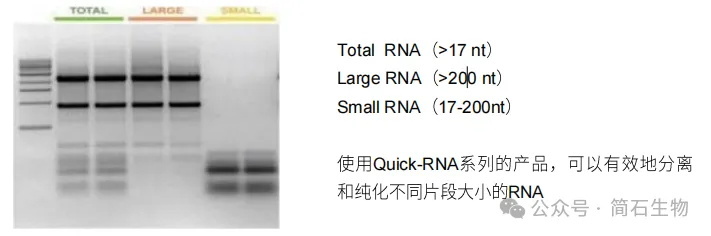
①Suitable for extraction from various lysate reactions, enzymatic reactions, phase separation (after adding TRIZOL), purification and concentration of total RNA (17nt) Large RNA (>200nt) 1 Micr RNA (17~200nt) from extracted total RNA.
②≥35μl elution volume can recover and concentrate high-quality RNA, and the obtained RNA can be used for reverse transcription, chips, NGS and other experiments.
③Uses both fully automated extraction instruments and manual operation.
④Automated purification process saves experimental costs and ensures high-quality Micro RNA, high purification recovery rate and purity, with minimal combined fragments, more suitable for downstream experiments such as transcription and sequencing.
II. Product Characteristics
①Sample source: Suitable for purification and concentration of RNA from various lysate reactions, enzymatic reactions, organic phase separation (after adding TRIZOL), and extracted Total RNA, separating Micro RNA. ②Size: RNA, including small/micro RNA (~17 nt ≤ 200nt), Large RNA (> 200nt).
③Purity: A260/A280 and A260/A230 > 1.8, suitable for downstream sequencing, RT-qPCR, etc.
④Elution volume: ≥35μl DNase/RNase-free water
⑤Required equipment (provided by the user): Microcentrifuge, fully automated purification and extraction instrument, high-quality magnetic rack.
RNA recovery steps for different fragments:

Different RNA fragment recovery steps
Next
Related News

Order Consultation: Hu Manager

Order Consultation: An Manager

End-user Scientific Research Customer Order Consultation

Technical Consultation: Bai Technical

Customer Service

Douyin

WeChat Video Account

Kuaishou

Contact Us
Jianshi Biotechnology (Beijing) Co., Ltd.
Company Address: Room 401, Building 11, No. 12 Courtyard, Juyuan Middle Road, Mapo Town, Shunyi District, Beijing
Phone: 86 18640171737
E-mail: gwang@jianshibio.com
Jianshi Biotechnology (Zhejiang) Co., Ltd.
Address: Building 11, No. 36 Xingshun Road, Zhongyi Ningbo Eco-park, Yuyao City, Zhejiang Province
WhatsApp: 86 18640171737
Leave a Message
If you are interested in our products, please leave your phone number.
Consult Now →Product Subscription
Subscribe to us to stay informed about product updates and special offers
WhatsApp:
mzhao@jianshibio.com:
WeChat:
8601058235289: